Social skills develop in a steady (but not perfectly straight) line—often in bursts, and often differently from child to child. A clear milestone chart can make everyday moments easier to understand: sharing toys, joining play, handling big feelings, and building real friendships. This guide breaks down age-typical social skill milestones, simple ways to practice them through play and routines, and how to spot patterns that may need extra support at home or in the classroom.
Social skills are the small, learnable abilities kids use to connect with others and navigate group life. They’re not about having a certain personality; they’re about having tools.
For a broader view of typical development, helpful references include the CDC’s Positive Parenting Tips and the American Academy of Pediatrics (HealthyChildren.org) Ages & Stages.
Use milestones like a weather report: they help you notice trends. Look for progress over months, not days. If a skill is “emerging,” small supports (visual cues, scripts, brief practice) can help it stabilize.
It also helps to check consistency across settings—home, school, playdates, and community activities. Some kids are “home confident” but quieter in groups; others show the opposite.
| Age range | Often developing | How it can look in real life | Helpful support |
|---|---|---|---|
| 12–24 months | Parallel play; simple imitation; early empathy | Plays near other kids; copies clapping; offers a toy when someone is upset | Narrate feelings; model gentle hands; short turn-taking games |
| 2–3 years | Simple sharing (with help); beginning pretend play; naming feelings | Says “my turn”; plays “kitchen”; can label “mad/sad/happy” | Use timers; practice scripts (“Can I have a turn?”); praise attempts |
| 3–4 years | Cooperative play; following simple group rules; repair attempts | Plays together for longer; can line up; may say “sorry” after prompting | Role-play conflicts; teach “stop” and “help”; use visual rules |
| 4–5 years | Friend preferences; negotiation; perspective-taking begins | Chooses certain friends; trades roles in play; notices unfairness | Practice “plan B”; label thoughts (“He wanted…”); coach flexible thinking |
| 5–6 years | Group play skills; winning/losing practice; independent problem-solving | Joins games at recess; may handle losing with reminders; seeks peers | Teach calming steps; rehearse good sportsmanship; problem-solving ladder |
| 6–8 years | Deeper friendships; social comparisons; understanding intentions | Has best friends; worries about fitting in; can explain “why it happened” | Coach kindness + boundaries; plan playdates; teach coping with teasing |
Practice works best when it’s short, repeatable, and emotionally safe. Keep the goal tiny—one skill, one moment—then build from there.
If social communication is a concern (like understanding cues or staying on topic), the ASHA overview of social communication offers clear, practical context.
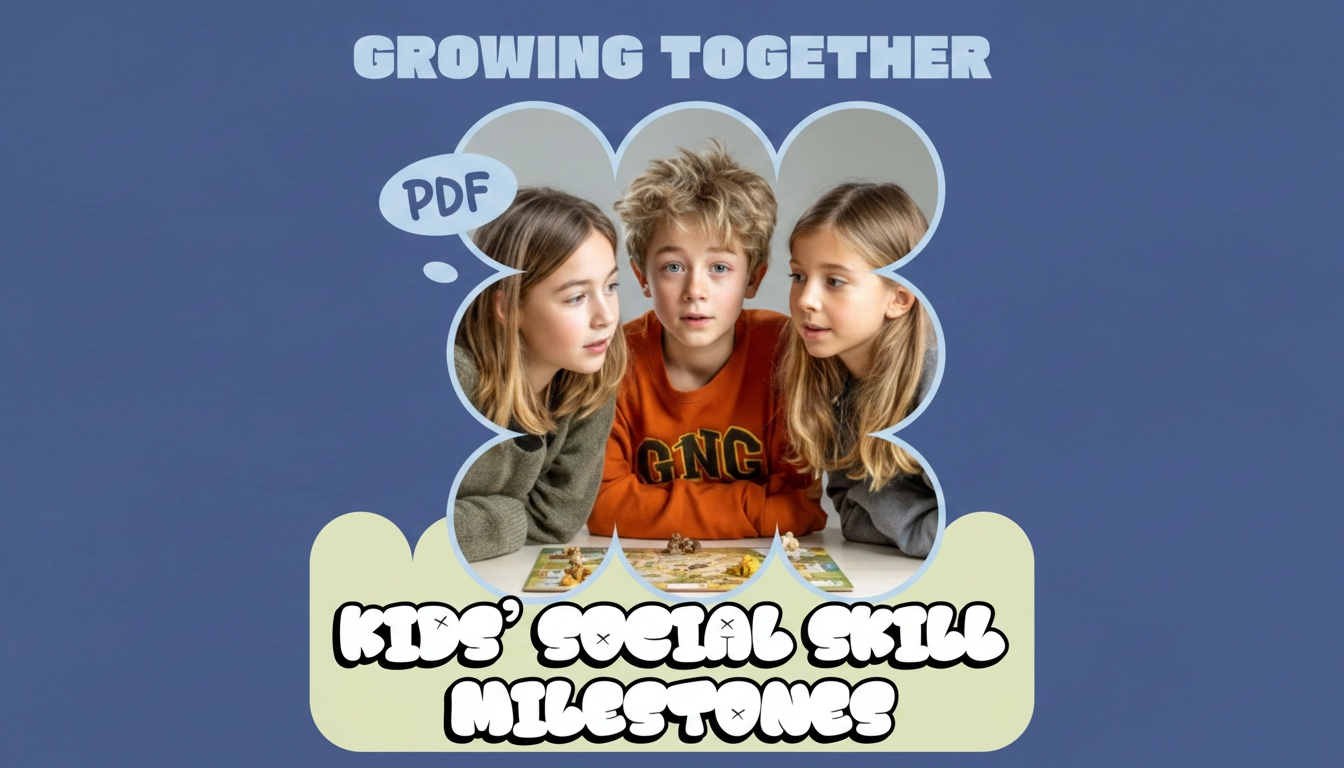
Having a simple milestone chart on hand makes it easier to choose a “next-step” skill instead of trying to fix everything at once. The Growing Together: A Fun Guide to Kids’ Social Skill Milestones eBook is designed for quick reference and practical practice planning.
To support routines around practice time, some families also like having a dedicated “grown-up carry-all” for cards, timers, and note sheets (see the Calvin Klein Women’s Black Zip Tote Bag) or setting up a consistent calm-and-play space in the living room (the Modern 2-Tier Faux Marble Coffee Table with Gold Metal Frame can work as a stable game-and-activity hub).
And when it’s time to celebrate progress—big or small—creating a fun family moment can reinforce connection (the Electric Cotton Candy Machine with Cart – Commercial Candy Floss Maker is an option for special occasions, classroom parties, or “friendship wins” days).
Milestones vary widely, so look for patterns over time and across settings rather than a single moment. Choose one concrete skill to practice (with brief daily repetition), and consider talking with a pediatrician or school team if concerns are persistent or clearly interfering with friendships or learning.
Focus on tools that support comfort, consent, and safety—like boundary-setting, repair scripts, and multiple communication options (verbal or nonverbal). The goal is genuine connection, not acting like someone else.
Short practice most days (about 2–5 minutes) tends to work better than occasional long sessions. Revisit the same skill for weeks, using routines and play so kids get many low-pressure reps.







Leave a comment