-
Shop
- Adidas
- Advanced Technologies
- Apple Accessories
- Best-Sellers
- Car Accessories
- Dating & Social Skills
- Digital Resources
- AI Skills
- Beauty
- Car Buying & Ownership
- Cozy Feast Collection
- Electronics & Technology
- Financial Education
- Hobbies
- Home Styling & Organization
- Mindset
- Online Business
- Parenting & Child Development
- Personal Style & Fashion
- Pet Lifestyle & Wellness
- Smart Life with AI
- Travel Planning
- Wellness
- Yoga & Fitness
- Education & Learning
- Family & Parenting
- Fashion
- Alexander McQueen
- Bags
- Bags & Wallets
- Balenciaga
- Belts
- Blazers
- Blouses & Shirts
- Bottega Veneta
- Brunello Cucinelli
- Burberry
- Chanel
- Chloé
- Dior
- Dolce & Gabbana
- Dresses
- Etro
- Fendi
- Gucci
- Hats & Hair Accessories
- Jacquemus
- Jewelry
- Jil Sander
- Keychains
- Kiton
- Luggage
- Luggage Bags
- Miu Miu
- Off-White
- Outerwear
- Prada
- Rick Owens
- Saint Laurent
- Socks & Tights
- The Row
- Tom Ford
- Valentino
- Valentino Garavani
- Versace
- Vivienne Westwood
- Watches
- Furniture
- Gadgets
- Health & Beauty
- Health & Wellness
- Home & Garden
- Kids & Babies
- Kitchen
- Lighting
- Patio, Lawn & Garden
- Personal Growth
- Pet Care
- Pet Supplies
- Pets
- Shoes
- Sport & Outdoors
- Stress Relief & Relaxation
- Travel
- Wealth
- Popular
- Best deals
Mini Foosball Tabletop Soccer Game Guide for Small Spaces
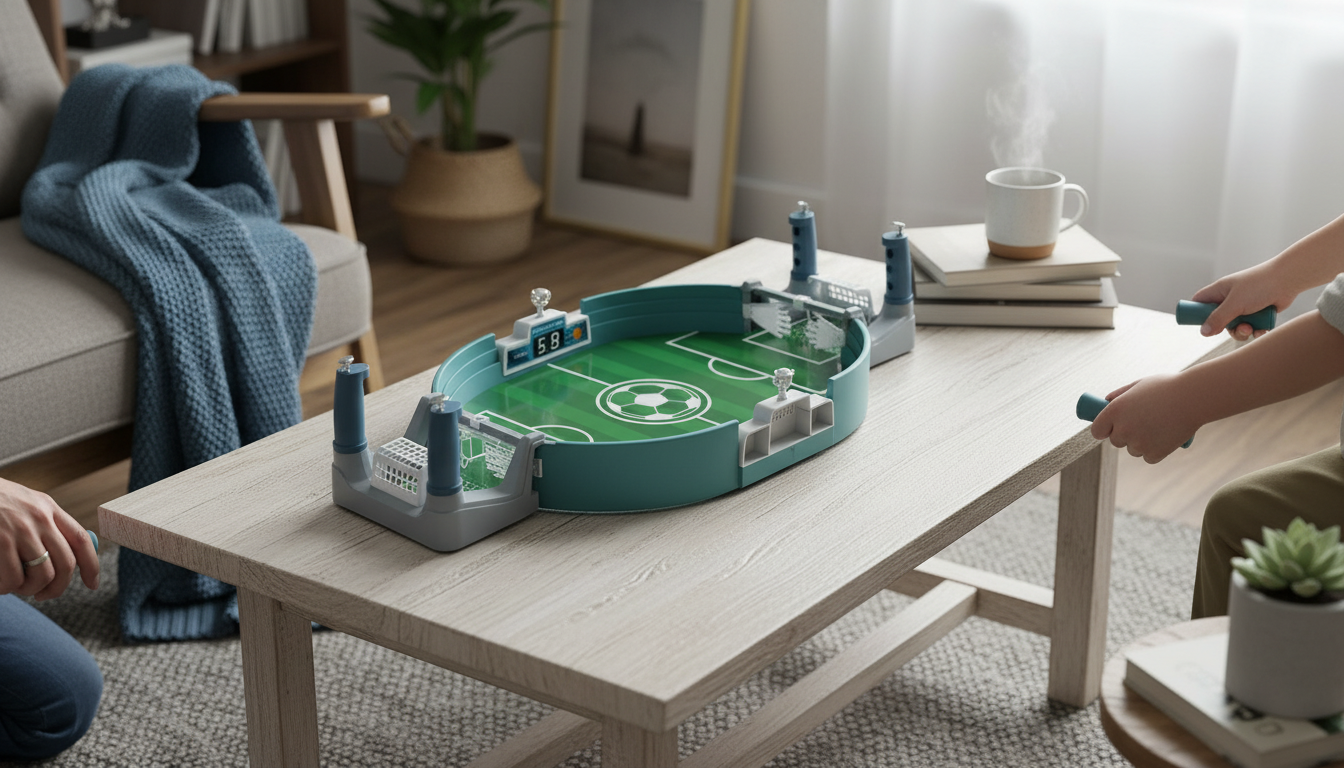
Mini Foosball Tabletop Soccer Game: Big Fun in a Small Space
A foosball tabletop soccer game brings fast, head-to-head action to dorm rooms, coffee tables, and family game nights—without the size or cost of a full foosball table. The appeal is simple: set it down, grab the handles, and you’re instantly in a quick match that feels energetic and social. Below is what to expect from a mini tabletop set, who it suits best, and a few small tweaks that can make a compact table play noticeably better.
What a Mini Tabletop Foosball Game Is (and Isn’t)
A mini tabletop foosball game is a compact, foosball-style set designed to sit on a table, desk, or even the floor for quick matches. It’s typically lighter and easier to move than full-size foosball tables, which makes it friendly for small spaces, shared rooms, and households that don’t want a permanent game table taking over the living area.
Gameplay is foosball-inspired—fast passes, quick shots, and reactive defense—but most tabletop versions use simpler construction and have shorter, more casual play sessions. You’ll still get the satisfying back-and-forth and the “one more game” effect, just in a format meant for convenience rather than strict competitive play.
For background on the broader game and how it’s traditionally played, Britannica offers a helpful overview of foosball and its place among table sports.
Who It’s Great For
Tabletop foosball shines in situations where space, budget, and setup time matter.
- Families who want an easy, screen-free activity that works for short attention spans and quick rounds. (The AAP has practical guidance on balancing entertainment and downtime at HealthyChildren.org.)
- Dorms, apartments, and offices looking for a competitive break-time game without dedicating permanent space.
- Kids and teens who like arcade-style games and want something more interactive than many board games.
- Gift-givers who want a fun, affordable option that feels hands-on and shareable.
Key Features to Look For in a Tabletop Foosball Set
Mini tables vary a lot in how “solid” they feel. A few features tend to make the difference between a novelty toy and a game that gets pulled out regularly.
- Stable base: A wider footprint and anti-slip feet help keep the table from skidding during quick play, especially on smooth surfaces like lacquered desks.
- Smooth rods and comfortable grips: Less friction means faster play and fewer stuck spins. Comfortable handles matter more than expected in back-to-back matches.
- Durable player figures: Stronger figures hold up to harder shots and repeated handling—important if kids get competitive.
- Ball control and field feel: A slightly textured field can reduce wild ricochets and keep the ball’s movement readable, which makes defense and passing more skill-based.
- Simple assembly and maintenance: Fewer parts and accessible rod ends make it easier to keep the game running and aligned.
Mini Foosball Tabletop Soccer Game at a Glance
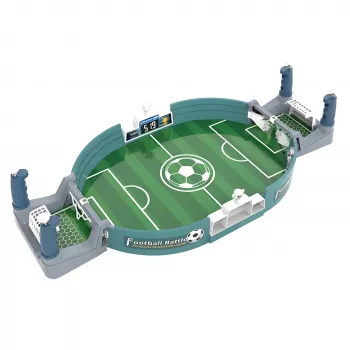
If you want a budget-friendly way to add a classic arcade vibe to a small corner of the living room—or start a coffee-table tournament—this compact set is designed for quick setup and quick matches. It’s also easy to store on a shelf or slide under a bed between game nights.
| Item | Details |
|---|---|
| Product | Mini Foosball Tabletop Soccer Game |
| Price | 15.51 USD |
| Availability | In stock |
| Product page | https://lurican.com/mini-foosball-tabletop-soccer-game/ |
How to Set It Up for Better Gameplay
Small adjustments can make a compact table feel more controlled and more “arcade-like.”
- Choose a non-wobbly surface: A sturdy dining table or desk improves control and reduces accidental goals caused by shifting.
- Add grip underneath: A thin rubber mat or shelf liner under the table can prevent sliding during intense matches.
- Give players elbow room: Leave space at both ends so rod movement is unrestricted and hands don’t collide with walls, couch arms, or laptops.
- Use consistent house rules: Decide match length (first to 5 or 10), whether spinning is allowed, and how to restart after goals so games stay friendly.
Simple Ways to Make Matches More Fun
Mini tables are ideal for “micro-competitions”—short rounds that keep everyone engaged without long waits.
Care, Storage, and Longevity
Two Add-Ons That Pair Well with Game Night
- Modern 2-Tier Faux Marble Coffee Table with Gold Metal Frame for a dedicated spot to set up the table and keep snacks, controllers, or card decks organized.
- Electric Cotton Candy Machine with Cart – Commercial Candy Floss Maker for parties where you want that carnival-style treat alongside quick mini-tournaments.
FAQ
What’s the difference between a tabletop foosball game and a full-size foosball table?
Tabletop versions are smaller, lighter, and easier to store, but they’re usually less stable and less heavy-duty than full-size tables. They prioritize convenience and quick matches over tournament-grade weight, precision parts, and long-term competitive durability.
Is a mini foosball tabletop game good for kids?
Yes—many kids enjoy the fast, hands-on play and short rounds, and it can support hand-eye coordination and social interaction. Adult supervision is helpful for younger children since some sets may include small parts and fast-moving rods.
How can sliding be reduced during fast matches?
Place the game on a sturdy, level surface and add a rubber mat or shelf liner underneath for extra grip. Also make sure the table’s feet are clean and give players enough space so they aren’t bumping the table while moving the rods.








Leave a comment