Natural Gas Tankless Water Heaters: Performance, Sizing, Costs, and What to Expect
A natural gas tankless water heater delivers hot water on demand while reducing standby losses compared with storage tanks. The right results depend on proper sizing, gas supply, venting, and water conditions—so planning matters as much as the unit itself.
How a Tankless Gas Water Heater Works
When a hot-water tap opens, cold water begins flowing through the unit’s heat exchanger. A burner ignites and transfers heat into the water stream, raising temperature quickly so you can use hot water without waiting for a tank to refill.
Two variables largely control performance: flow rate (measured in gallons per minute, or GPM) and temperature rise (how many degrees the unit must heat incoming water). Modern units rely on electronic controls, ignition, and multiple safety sensors—such as flame verification, exhaust/vent monitoring, and overheat protection—to regulate output.
Real-world hot-water delivery still varies. Incoming water temperature in winter, multiple fixtures running at once, and scale buildup on the heat exchanger can all reduce the hot-water volume you can get at your preferred temperature.
Key Benefits and Tradeoffs
Benefits that matter day to day
- Space savings: Wall-mount designs can free up floor area compared with a bulky storage tank.
- Potential energy savings: With no tank of water being kept hot 24/7, standby heat loss drops. Savings are usually strongest when the unit is matched to actual household usage patterns.
- Consistent hot water when properly sized: For normal use—showers, sinks, and typical appliance draws—output can feel steadier than a tank that eventually runs out.
Tradeoffs to plan around
- Upfront complexity: Gas line sizing, vent routing, and condensate management (on condensing models) can add time and parts.
- Peak limits: If several high-flow uses happen at once, the unit can hit its maximum capacity and temperature may drop.
- Power dependency: Most gas tankless units require electricity for controls and ignition; during an outage, hot water may stop unless you have backup power.
Sizing for a Whole-Home Setup
“Bigger” isn’t always better—correct sizing is about meeting peak demand at the temperature rise your home experiences, especially during colder months.
- Estimate peak demand: List what might run simultaneously (e.g., one shower plus dishwasher fill) and add the typical GPM for each.
- Calculate temperature rise: Subtract incoming cold-water temperature from your target hot-water temperature. If incoming water is 45°F and you want 120°F at the heater, that’s a 75°F rise.
- Shop by performance at your rise: A unit’s “max GPM” often assumes a smaller temperature rise; check the performance chart for your conditions.
- Check minimum activation flow: Very low-flow fixtures can fail to trigger older or lower-end units consistently.
- Confirm gas input needs: High-output units can require large BTU input; your meter/regulator and supply line must support it.
Example flow planning for peak-use moments
| Use case |
Typical flow (GPM) |
Notes |
| Shower (standard) |
1.8–2.5 |
Low-flow heads reduce demand |
| Kitchen faucet |
1.0–2.2 |
Higher for pot filling |
| Dishwasher (during fill) |
1.0–2.0 |
Intermittent draw |
| Clothes washer (during fill) |
1.5–3.0 |
Varies by machine and cycle |
Installation Requirements That Commonly Drive Cost
Installation cost often depends less on the heater itself and more on what has to change around it to meet code and deliver safe, reliable performance.
- Gas supply upgrades: Many homes need a larger gas line, a shorter run with fewer restrictions, or even a meter upgrade to support the unit’s BTU load—especially if other gas appliances are present.
- Venting selection and routing: Non-condensing units typically require higher-temperature venting, while many condensing models use manufacturer-approved PVC/CPVC/PP systems. Vent termination clearances and route length matter.
- Condensate handling (condensing units): Condensation is acidic and may require a neutralizer kit and a proper drain route.
- Combustion air: Direct-vent/sealed combustion is often preferred in tighter homes to avoid depressurization risks.
- Service valves and isolation: Isolation valves (and often a flush kit) make descaling and repairs far easier and can reduce labor later.
- Permits and inspection: Common for gas work, vent modifications, or relocating equipment.
Operating Costs, Maintenance, and Expected Lifespan
Operating cost depends on how you use hot water. Long, steady draws tend to be efficient; lots of short bursts can increase cycling and reduce real-world efficiency. For a general overview of water-heating energy use, the U.S. Department of Energy’s guidance is a helpful starting point: https://www.energy.gov/energysaver/water-heating.
Maintenance is largely about protecting the heat exchanger:
Safety, Codes, and Compatibility Checks
For efficiency benchmarks and model qualification guidance, ENERGY STAR is a reliable reference: https://www.energystar.gov/products/water_heaters.
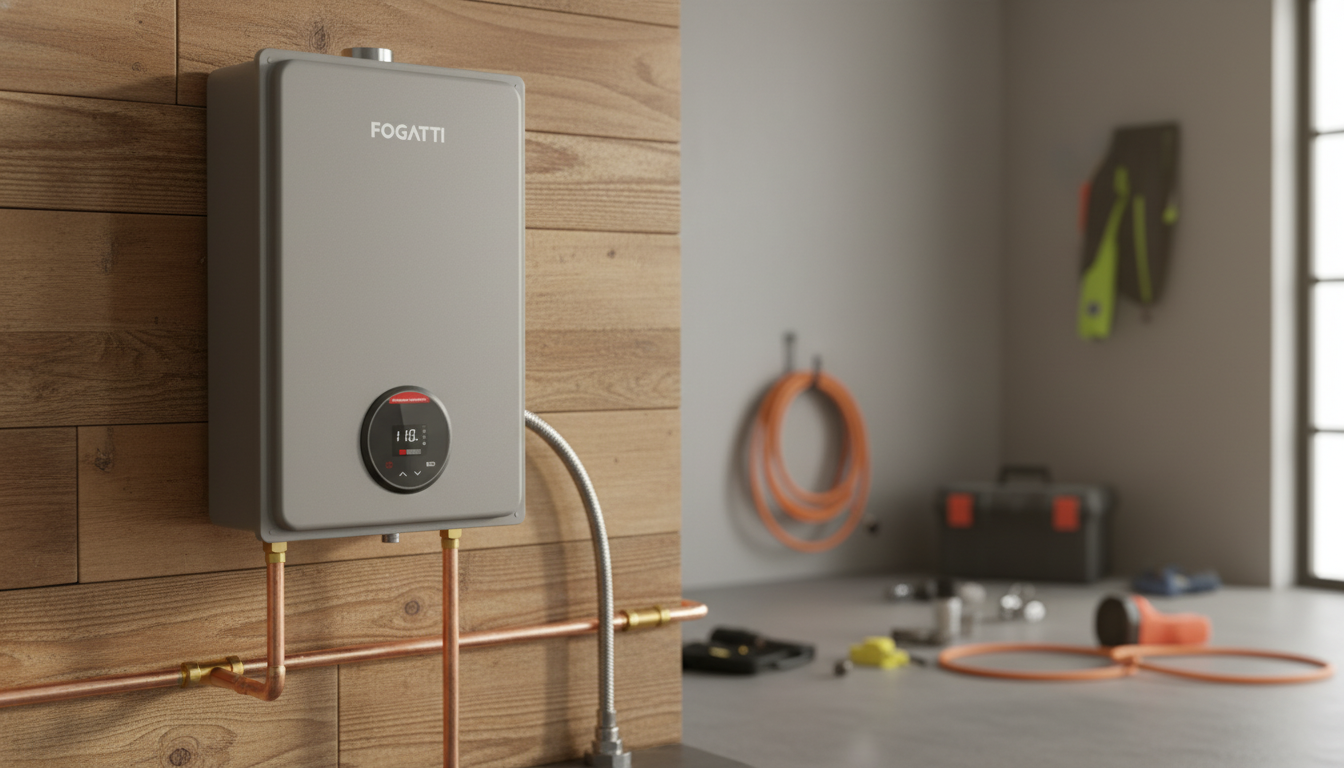
Available now: Natural Gas Tankless Water Heater.
More In-Stock Picks
FAQ
How much does it cost to install a natural gas tankless water heater?
Installation commonly ranges from about $1,500 to $5,500+, with the biggest price swings coming from venting changes, gas line upsizing or meter upgrades, adding a condensate drain/neutralizer for condensing models, adding an electrical outlet, permits/inspections, local labor rates, and whether it’s a straightforward replacement versus a relocation.
Is there an IRS tax credit for a tankless water heater?
It depends on the model’s efficiency ratings and the tax rules in effect for the year of installation. Check whether the unit qualifies under current guidance and keep documentation such as receipts and the model number; the IRS credit details are outlined here: https://www.irs.gov/credits-deductions/energy-efficient-home-improvement-credit.
Recommended for you






Leave a comment