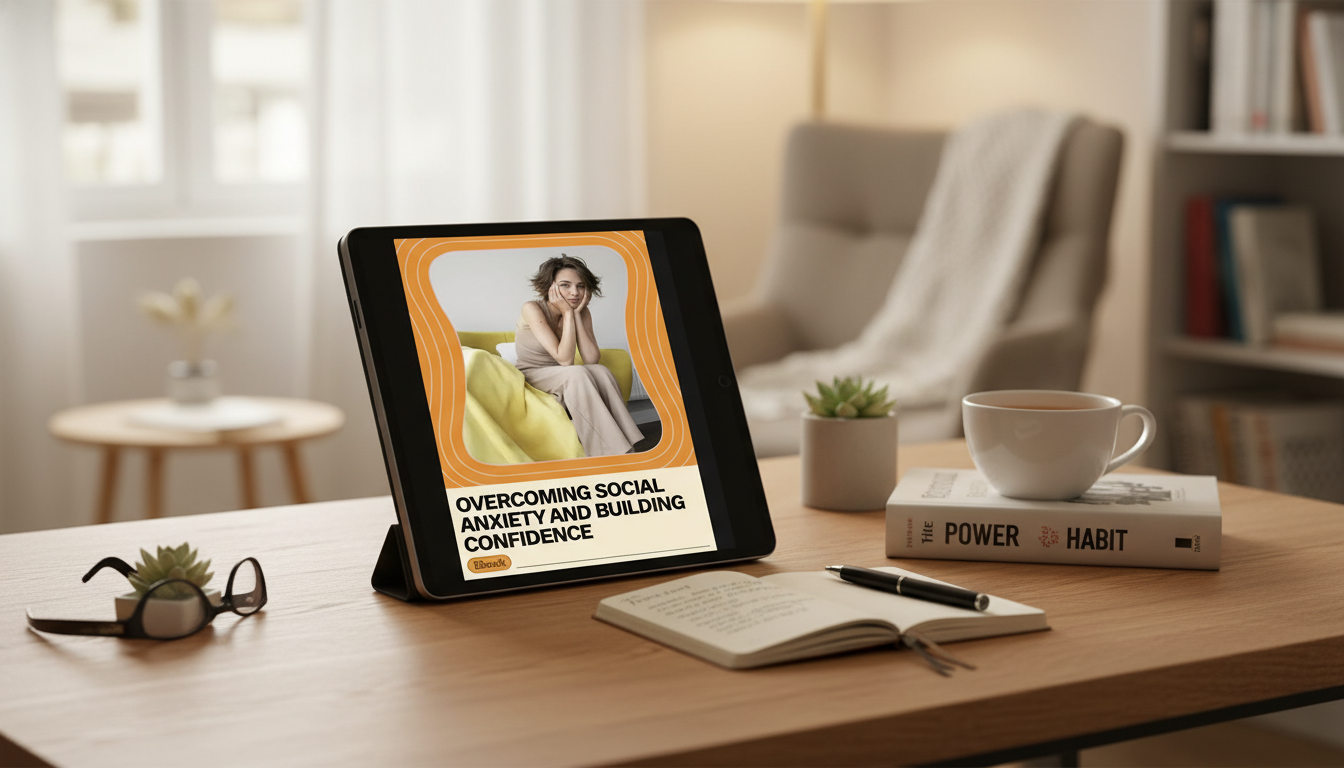
Social anxiety can make everyday moments—introductions, small talk, meetings, even quick errands—feel like high-stakes performances. Confidence isn’t a personality trait reserved for a lucky few; it’s a set of skills that can be practiced and strengthened. The goal is not to become “fearless,” but to feel more capable, more grounded, and more in control in social situations—one repeatable step at a time.
Social anxiety often shows up as a predictable loop: fear of judgment, intense self-monitoring, the mind going blank, and replaying conversations afterward like a highlight reel you didn’t ask for. These patterns can feel personal, but they’re also common—your nervous system is trying to prevent rejection by keeping you on high alert.
The body responses can reinforce the fear: racing heart, shaky voice, blushing, sweating. It’s easy to mistake those sensations as “proof” you’re doing something wrong, when they’re really just a stress response. If you’ve ever thought, “Everyone can see I’m nervous,” that’s anxiety interpreting normal physiology as a verdict.
Avoidance and “safety behaviors” can also lock the pattern in place. Staying quiet, over-preparing, checking your phone, sticking to the edges of a room—these reduce anxiety short-term, but teach the brain that the situation was dangerous and escape was necessary. Confidence grows when the brain learns a different lesson: “I can handle discomfort and still do the thing.”
For a deeper clinical overview, the National Institute of Mental Health provides a clear snapshot of social anxiety disorder and how common it is: NIMH: Social Anxiety Disorder.
Confidence is built through exposure to manageable challenges, not through perfect performance. Think “practice reps,” not “personality makeover.” If you wait to feel calm before you act, you may never start—because calm is often the result of doing the thing repeatedly, not the prerequisite.
Aim for “good enough” interactions: clarity over charm, presence over perfection. Instead of trying to be impressive, focus on being understandable and engaged. Even a simple “Nice to meet you” plus a question is a solid win.
What happens after the interaction matters just as much as what happens during it. Recovery is where confidence either grows or gets crushed. Replace harsh self-criticism with a brief, factual review: what happened, what went okay, and one small tweak for next time. Track progress by behaviors (spoke up once) rather than feelings (still felt nervous). Anxiety can be present and you can still be effective.
Anxiety is a common nervous-system response. It can rise and fall without needing to be “fixed” in the moment. The American Psychological Association has helpful background on how anxiety works in general: APA: Anxiety.
If you’d like a structured, step-by-step format to plan exposures, choose tools, and stay consistent, a guided resource can help: Overcoming Social Anxiety and Building Confidence (ebook guide).
| Moment | Tool | How to Use (1–2 lines) | Best For |
|---|---|---|---|
| Before | 60-second long-exhale breathing | Inhale gently through nose, exhale longer through mouth or nose; repeat 6–8 cycles | Reducing physical surge |
| Before | Values intention | Pick one value: “be kind,” “be curious,” “be clear” | Staying aligned under stress |
| During | Curiosity questions | Ask one open question: “How did you get into that?” | Shifting focus outward |
| During | Bridge phrase | Use a neutral pause: “Let me think for a moment” | Mind going blank |
| After | 3-line debrief | 1) What happened 2) What went okay 3) One tweak next time | Stopping rumination |
| After | Kind self-talk | Talk to yourself like a supportive coach, not a critic | Reducing shame spiral |
For an additional health-system perspective on symptoms and support options, see: NHS: Social anxiety (social phobia).
Tips are helpful, but practice is what changes your baseline. A structured guide can turn scattered strategies into a repeatable routine—tool selection, exposure planning, and reflection prompts that keep you moving even on low-confidence days. One option designed for a realistic pace is Overcoming Social Anxiety and Building Confidence (ebook guide).
Creating a calmer “home base” can also make practice easier. If you recharge best in a soothing space, consider a simple living-room refresh anchored by a statement surface like the Modern 2-Tier Faux Marble Coffee Table with Gold Metal Frame. And for on-the-go comfort, having an organized, reliable carryall can reduce pre-outing friction—like the Calvin Klein Women’s Black Zip Tote Bag.
Yes. The goal is improved coping and confidence—not becoming extroverted. Skills-based practice, gradual exposure, and self-compassion can reduce distress while keeping your natural temperament intact.
Take one slow exhale, use a bridge phrase like “Let me think for a second,” then ask a simple follow-up question and refocus on listening. Pauses are normal and don’t mean the interaction is failing.
It varies, but measurable progress often shows up within weeks when practice is consistent. Focus on repetition and small challenges, and track behavior-based wins even if you still feel nervous.






Leave a comment