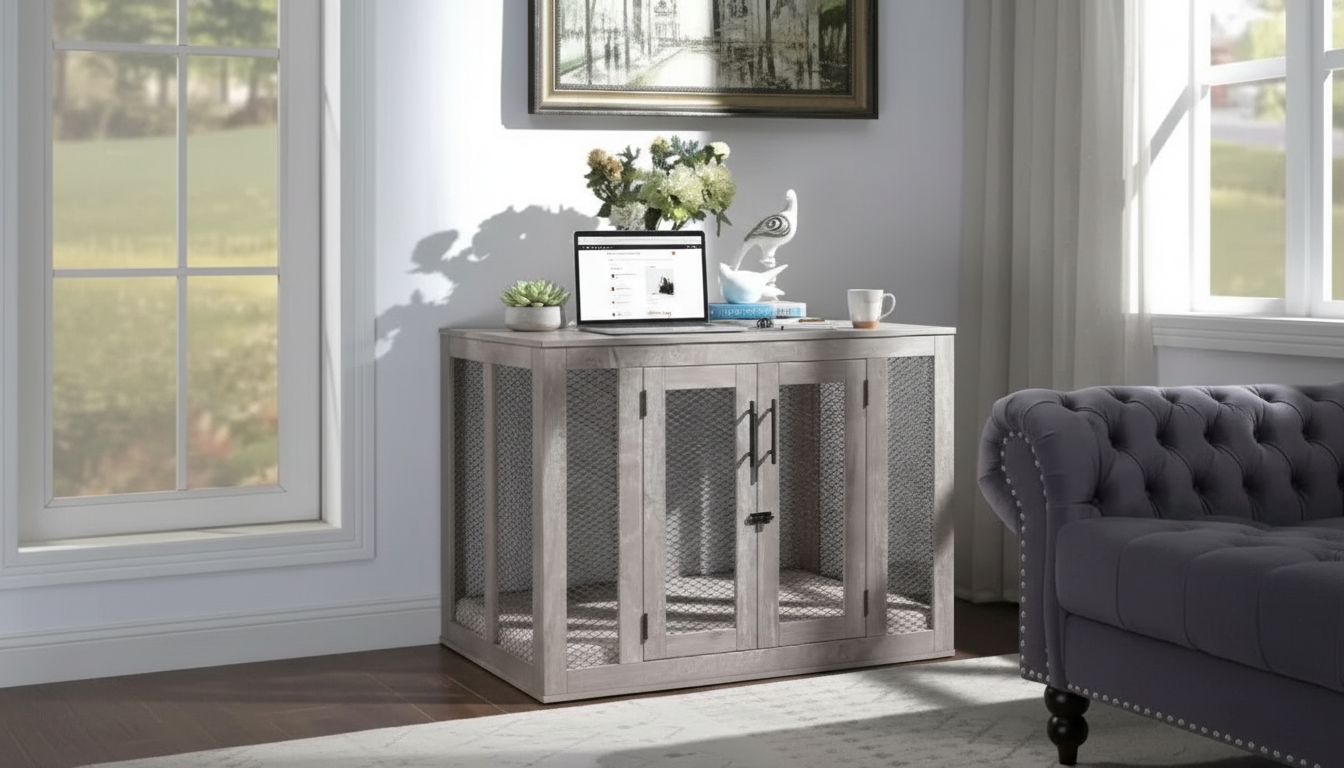
A compact crate can make daily life easier in smaller homes while still giving a dog a calm, defined place to rest. The right space-saving medium crate with a comfort cushion and door should fit your layout, feel inviting to your dog, and stay easy to clean—so it gets used consistently instead of becoming “one more thing” in the room.
What makes a crate truly space-saving
“Small” isn’t always “space-saving.” The best designs are built around how real rooms work.
- Footprint-first design: Look for a shape that tucks into tight wall runs, corners, or the end of a couch without blocking walkways or doorways.
- Usable top surface or clean lines: A flatter, furniture-like profile can blend into a layout and reduce visual clutter, especially in open-plan apartments.
- Door placement that works in tight spots: A door that opens smoothly without slamming into a wall, table, or chair will get used more often—and with less frustration.
- Easy to move for cleaning: If it’s realistic to shift the crate and vacuum underneath, odors and hair won’t build up as quickly.
Comfort cushion essentials (and what to avoid)
A cushion can turn a crate from “containment” into a place your dog chooses—if it’s practical and safe.
- Supportive padding: Choose a cushion with enough structure to help reduce pressure points during frequent naps without collapsing into a thin layer.
- Removable or cleanable cover: Easy cleaning usually matters more than extra fluff. A removable cover or wipeable layer helps after muddy paws or shedding seasons.
- Stable fit: A cushion should sit flat and stay put so your dog can turn around without sliding or bunching fabric.
- Chewer considerations: If chewing is a habit, start with supervised crate time and remove bedding temporarily if your dog tries to shred it. Reintroduce once calm behavior is consistent.
Door and entry design for everyday convenience
The door is the most-used part of any crate. A little attention here can prevent daily annoyances and improve your dog’s comfort.
- Secure latch: The door should close firmly and stay closed if your dog leans, paws, or shifts weight against it.
- Smooth edges and safe gaps: Check hinge areas and corners for pinch points. The entry should feel safe for paws, noses, and collars.
- Quiet operation: A smoother, less rattly door can help noise-sensitive dogs relax and reduces the chance of “door noise” becoming a stress trigger.
- Clear access for cleaning: Make sure the opening is big enough for quick reach-in: swapping the cushion, wiping corners, and retrieving a toy shouldn’t feel like a wrestling match.
Choosing the right size for a medium dog
Picking a medium crate by weight alone can miss the mark. Measurements produce a more comfortable fit.
- Measure your dog: Use length (nose to base of tail) and height (floor to top of head or ears).
- Right amount of room: Your dog should be able to stand, turn around, and lie down comfortably—without so much extra space that the crate feels like a wide-open room.
- Growth and coat changes: If your dog is still maturing, or grows a fuller coat seasonally, allow enough clearance for comfort.
- If between sizes: Prioritize an easy turn-around and natural resting posture while keeping the footprint realistic for your floor plan.
Quick fit check for crate comfort
| Check |
What to look for |
Why it matters |
| Stand |
Back not hunched; head not forced down |
Prevents discomfort and restlessness |
| Turn |
Can turn in one smooth motion |
Supports settling and reduces anxiety |
| Lie down |
Can stretch out or curl up naturally |
Improves sleep quality and crate acceptance |
| Door clearance |
Dog passes through without brushing sides |
Reduces hesitation and snagging |
Placement ideas for small homes
Where the crate lives can matter as much as which crate you buy. Aim for comfort, access, and a calm feel.
Getting a dog comfortable with the crate
For additional training and safety guidance, see resources from the American Kennel Club (AKC), Humane World for Animals, and the American Veterinary Medical Association (AVMA).
Cleaning, odor control, and durability basics
When a cushion-and-door crate is especially useful
Product options to consider
FAQ
How long should a medium dog stay in a crate?
It depends on your dog’s age, training level, and daily routine, but regular breaks for exercise, water, and bathroom needs are essential. Avoid excessive confinement, and if you’re dealing with anxiety, medical recovery, or special circumstances, check with a veterinarian or qualified trainer for a plan.
Should the cushion stay in the crate all the time?
Yes if your dog reliably leaves bedding alone and stays clean, since consistency can make the crate more inviting. If chewing or soiling happens, use the cushion during supervised periods, rotate washable covers, and remove it temporarily while you rebuild calmer crate habits.
Where is the best place to put a crate in a small apartment?
A low-traffic spot that still feels socially connected—like a living room corner or a bedroom wall—usually works best. Keep it away from drafts and heat sources, and make sure there’s enough door clearance for easy daily use and cleaning access.
Recommended for you





Leave a comment