-
Shop
- Adidas
- Advanced Technologies
- Apple Accessories
- Best-Sellers
- Car Accessories
- Dating & Social Skills
- Digital Resources
- AI Skills
- Beauty
- Car Buying & Ownership
- Cozy Feast Collection
- Electronics & Technology
- Financial Education
- Hobbies
- Home Styling & Organization
- Mindset
- Online Business
- Parenting & Child Development
- Personal Style & Fashion
- Pet Lifestyle & Wellness
- Smart Life with AI
- Travel Planning
- Wellness
- Yoga & Fitness
- Education & Learning
- Family & Parenting
- Fashion
- Alexander McQueen
- Bags
- Bags & Wallets
- Balenciaga
- Belts
- Blazers
- Blouses & Shirts
- Bottega Veneta
- Brunello Cucinelli
- Burberry
- Chanel
- Chloé
- Dior
- Dolce & Gabbana
- Dresses
- Etro
- Fendi
- Gucci
- Hats & Hair Accessories
- Jacquemus
- Jewelry
- Jil Sander
- Keychains
- Kiton
- Luggage
- Luggage Bags
- Miu Miu
- Off-White
- Outerwear
- Prada
- Rick Owens
- Saint Laurent
- Socks & Tights
- The Row
- Tom Ford
- Valentino
- Valentino Garavani
- Versace
- Vivienne Westwood
- Watches
- Furniture
- Gadgets
- Health & Beauty
- Health & Wellness
- Home & Garden
- Kids & Babies
- Kitchen
- Lighting
- Patio, Lawn & Garden
- Personal Growth
- Pet Care
- Pet Supplies
- Pets
- Shoes
- Sport & Outdoors
- Stress Relief & Relaxation
- Travel
- Wealth
- Popular
- Best deals
Pet Calming Scents Checklist: Safe Routines for Dogs & Cats
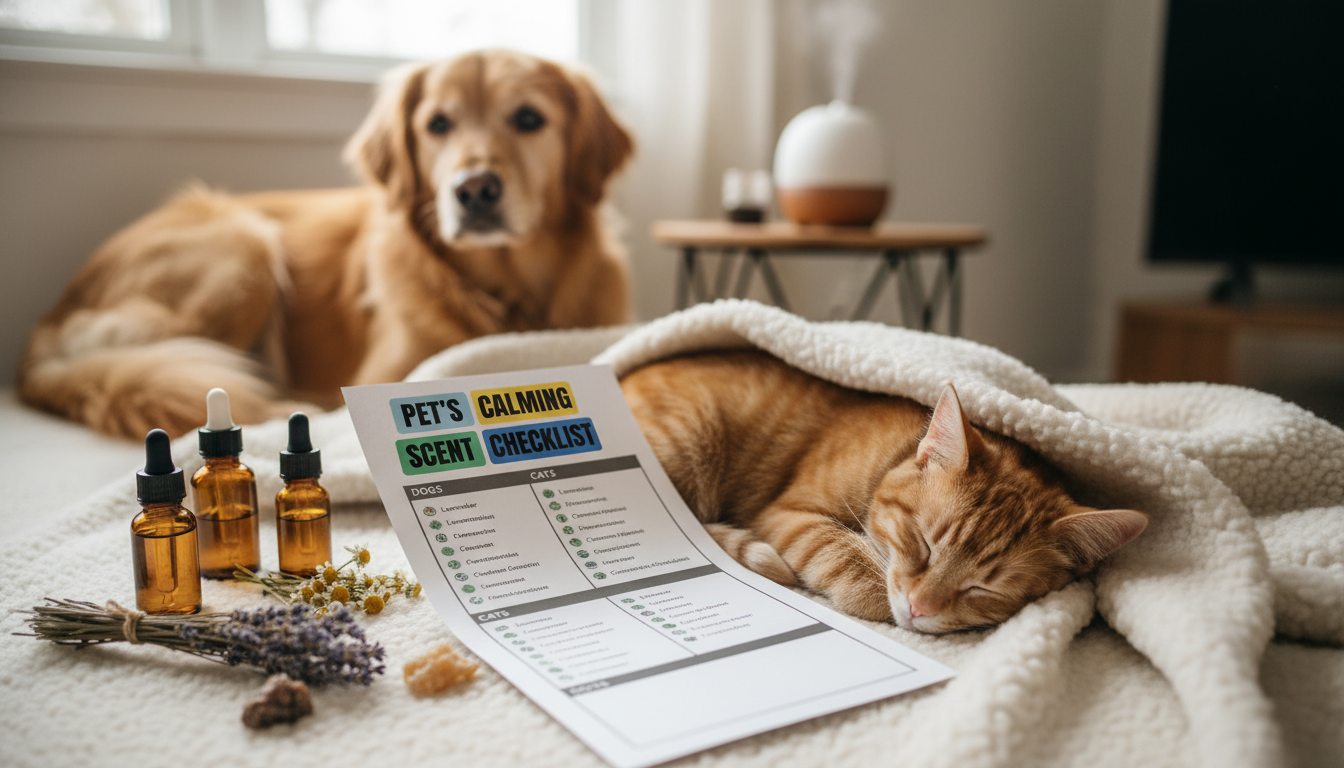
Pet’s Calming Scent Checklist: A Printable Routine for Dogs and Cats
Calming scents can be a helpful part of a pet’s comfort routine during common stressors like thunderstorms, guests, travel, grooming, and separation. The key is to keep it gentle, optional, and consistent—especially for cats, who can be more sensitive to airborne fragrances and concentrated oils. This guide organizes scent-based options into a simple checklist format, with safety-first notes for dogs and cats, plus practical steps for introducing any new smell slowly and predictably.
When calming scents can help (and when to pause)
Scent-based tools tend to work best for predictable or repeating stress moments—when you can start your routine before fear peaks. Common anxiety triggers include loud noises, fireworks, storms, vet visits, car rides, moving homes, new pets, schedule changes, and being left alone.
Signs of stress to watch for
Dogs may pace, pant, tremble, whine, hide, become clingy, act destructively, or show appetite changes. Cats may hide, overgroom, eliminate outside the litter box, eat less, vocalize more, show aggression, or withdraw.
Pause and consult a veterinarian if you notice vomiting, diarrhea, coughing, wheezing, facial swelling, extreme lethargy, seizures, or a sudden behavior change. Calming scents are supportive—not a replacement for medical care, training support, or a full plan that includes predictable routines, safe spaces, enrichment, and gradual desensitization.
Safety basics for scent-based calming at home
Before using any scent product, start low and slow. Introduce one option at a time, keep intensity minimal, and observe your pet for 24–48 hours. Always provide choice: pets should be able to leave the area freely, and they should have a scent-free resting spot.
Ventilation matters. Use scents in well-aired rooms, avoid continuous exposure, and never apply essential oils directly to fur or skin unless specifically directed by a veterinarian. Cats are more sensitive to many essential oils and airborne irritants, so conservative use and pet-labeled formulations are especially important. Be extra cautious with puppies/kittens, seniors, pregnant animals, and pets with asthma or other respiratory conditions.
Finally, treat concentrated products like any household hazard: keep them secured so pets can’t lick spills, chew diffusers, or contact undiluted oils. For more on essential oil risks, review guidance from ASPCA Animal Poison Control.
| Check | Why it matters | What to do |
|---|---|---|
| Species | Cats and dogs process scents differently | Use cat-safe approaches; default to the gentlest option |
| Intensity | Strong odors can increase stress or irritate airways | Use minimal amounts; avoid overpowering smells |
| Exposure time | Continuous exposure may lead to irritation or aversion | Use short sessions with breaks |
| Pet choice | Forced exposure can worsen anxiety | Ensure easy exit and a scent-free resting spot |
| Household risks | Concentrates can be toxic if ingested | Store securely; wipe spills immediately |
The calming scent checklist: options to try by category
1) Pheromone-based options (species-specific)
Pheromone products are designed for pets and are often used for situational stress (visitors, travel, fireworks) and longer transitions (new home, new pet). Choose dog-specific or cat-specific versions and follow label directions carefully.
2) Herbal aroma options (pet-labeled)
3) Calming home environment “scents” (often unscented)
A calmer environment is frequently less about adding fragrance and more about removing harsh smells. Reduce strong cleaners, smoke, incense, and heavily perfumed sprays—especially in small rooms where odors concentrate. Many cats do best with clean, neutral air; for additional stress context, see International Cat Care.
4) Scented objects with familiarity
5) Event-based routines (predictability + pairing)
Pair any scent strategy with a predictable routine before the stressor begins: a quiet room, white noise, a covered safe space, and an enrichment toy. Planning ahead is especially helpful during noisy holidays and storms; general preparation tips from the American Veterinary Medical Association can be adapted to loud events.
How to introduce a new scent in 5 steps
Printable routine ideas for common stress moments
Thunderstorms and fireworks
Car rides
Separation
Vet and grooming days
Using a digital checklist to track what actually helps
Digital download: Pet’s Calming Scent Checklist
If you want a ready-to-use format, the Pet’s Calming Scent Checklist (digital download) is designed to organize calming scent options and introduce them safely. It’s especially useful for multi-pet homes because you can track what works for each pet and plan ahead for predictable stressors like travel, holidays, or visitors.
To keep your routine portable, a dedicated “calm kit” can help you stay consistent from home to car to clinic; a roomy everyday carrier like the Calvin Klein Women’s Black Zip Tote Bag can hold checklists, treats, wipes, and a familiar blanket. For setting up a stable calm corner at home, a sturdy surface like the Modern 2-Tier Faux Marble Coffee Table with Gold Metal Frame can help organize routine items (white-noise device, treats, puzzle toys) so the setup is always easy to repeat.
FAQ
Are essential oils safe for dogs and cats?
Safety varies by species and by oil, and cats are especially sensitive to many essential oils. Avoid direct application and avoid strong or continuous diffusion; choose pet-labeled options and ask a veterinarian for guidance, especially for kittens/puppies or pets with respiratory conditions.
How long does it take to see results from calming scents?
Some pets show improvement within hours, while others need several calm, low-intensity exposures over a few days. Consistency and pairing the scent with a predictable calming routine can make results more reliable.
What if my pet seems more stressed after introducing a scent?
Remove the scent, ventilate the area, and offer a scent-free safe space immediately. If you see coughing, wheezing, facial swelling, vomiting, extreme lethargy, or any sudden severe behavior change, contact a veterinarian right away.
Recommended for you


VEX AI Vision Sensor Setup: Mount, Calibrate, Code
May 26, 2026
Confidence Is My Outfit: Meaning & How to Use It
May 26, 2026







Leave a comment