-
Shop
- Adidas
- Advanced Technologies
- Apple Accessories
- Best-Sellers
- Car Accessories
- Dating & Social Skills
- Digital Resources
- AI Skills
- Beauty
- Car Buying & Ownership
- Cozy Feast Collection
- Electronics & Technology
- Financial Education
- Hobbies
- Home Styling & Organization
- Mindset
- Online Business
- Parenting & Child Development
- Personal Style & Fashion
- Pet Lifestyle & Wellness
- Smart Life with AI
- Travel Planning
- Wellness
- Yoga & Fitness
- Education & Learning
- Family & Parenting
- Fashion
- Alexander McQueen
- Bags
- Bags & Wallets
- Balenciaga
- Belts
- Blazers
- Blouses & Shirts
- Bottega Veneta
- Brunello Cucinelli
- Burberry
- Chanel
- Chloé
- Dior
- Dolce & Gabbana
- Dresses
- Etro
- Fendi
- Gucci
- Hats & Hair Accessories
- Jacquemus
- Jewelry
- Jil Sander
- Keychains
- Kiton
- Luggage
- Luggage Bags
- Miu Miu
- Off-White
- Outerwear
- Prada
- Rick Owens
- Saint Laurent
- Socks & Tights
- The Row
- Tom Ford
- Valentino
- Valentino Garavani
- Versace
- Vivienne Westwood
- Watches
- Furniture
- Gadgets
- Health & Beauty
- Health & Wellness
- Home & Garden
- Kids & Babies
- Kitchen
- Lighting
- Patio, Lawn & Garden
- Personal Growth
- Pet Care
- Pet Supplies
- Pets
- Shoes
- Sport & Outdoors
- Stress Relief & Relaxation
- Travel
- Wealth
- Popular
- Best deals
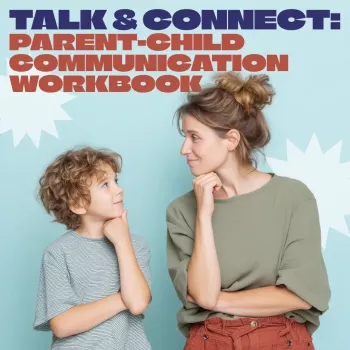
Talk & Connect Workbook: Better Parent-Child Talks

Talk & Connect: A Practical Parent-Child Communication Workbook for Stronger Bonds
Busy days, big feelings, and short answers can make it hard to stay emotionally close as a family. Talk & Connect: Parent-Child Communication Workbook turns connection into a simple routine with conversation starters, reflection prompts, and small habits that help kids feel heard and parents feel more confident—without turning every talk into a lecture.
Why connection gets harder (and what helps)
Most families don’t drift apart because they stop caring; they drift because life gets loud. Rushed schedules, sibling dynamics, screens, and stress spillover can turn home into a relay race of instructions: “Shoes on,” “Hurry up,” “Did you do your homework?” When everyone is moving fast, the emotional check-in is often the first thing to disappear.
Disconnection can show up in familiar ways: defensiveness, silence, sudden outbursts, or the classic “fine” and “nothing” responses. Sometimes it looks like a child who argues about every request; other times it’s a child who shuts down the minute a hard topic appears.
What helps most is surprisingly small: predictable check-ins, emotional validation, and curiosity over correction. Instead of trying to “fix” the feeling, the goal is to recognize it—so the child doesn’t have to escalate to be understood. A realistic target isn’t perfect harmony; it’s fewer power struggles and more moments of felt safety and trust.
For additional guidance on age-appropriate, supportive parenting practices, resources like the CDC’s Positive Parenting Tips can be a helpful reference point.
What “Talk & Connect” is designed to do
This workbook is built for real life: short, repeatable, and flexible enough to use in everyday moments. It helps families create a communication practice using guided prompts and bite-sized exercises that strengthen emotional literacy—naming feelings, needs, and coping strategies—without making conversations feel like an interrogation.
It also supports practical positive parenting skills: listening without rushing to solutions, showing empathy while holding calm boundaries, and repairing after conflict so mistakes don’t become the family story.
Quick look: how workbook prompts can be used
| Moment | Goal | Example prompt | Time needed |
|---|---|---|---|
| After school | Decompress and reconnect | “What was the best and hardest part of today?” | 3–5 minutes |
| Bedtime | Emotional safety | “Is there anything your mind is still holding on to?” | 5 minutes |
| During conflict | De-escalation | “What do you need right now—space, help, or a hug?” | 1–3 minutes |
| Weekend check-in | Growth and planning | “What would make this week feel easier?” | 10 minutes |
For families who want a calm place to sit together for a short check-in, a simple “talk corner” can make routines easier to keep. A living-room anchor like the Modern 2-Tier Faux Marble Coffee Table with Gold Metal Frame can double as a journaling surface, a game spot, or a consistent place to leave the workbook so it doesn’t get buried under papers.
How to use the workbook as a weekly routine
Consistency matters more than intensity. Pick a “connection window”—the same time daily or three times a week—so it becomes expected and requires less negotiation. Many families do well with short after-school check-ins plus one longer weekend conversation.
- Start with low-stakes topics before moving into tougher emotions. Warmth comes first; depth follows.
- Use one prompt at a time. If your child is engaged, stop early while it still feels good.
- Pair prompts with a calm activity (drawing, a snack, a short walk, folding laundry together) to reduce pressure and eye-contact intensity.
- End with repair language when needed: “I’m sorry for how that came out. Let’s try again.”
When stress is high, parents often go into “manager mode.” If you’re looking for evidence-based reminders about staying steady during hard stages, the APA’s stress and parenting resources offer practical strategies for keeping your nervous system from running the conversation.
Conversation starters that deepen emotional connection
Great questions feel like doors, not spotlights. They invite a child to share without feeling trapped or judged. Try rotating through categories so your conversations don’t only happen when there’s a problem to solve.
- Feelings and needs: “What feeling visited you most today?” and “What would have helped?”
- Friendships and social stress: “When did you feel included or left out?”
- Self-esteem: “What is something you’re proud of that no one noticed?”
- Values and choices: “What was a kind thing you saw someone do?”
- Repair after a hard moment: “What do you wish I understood about you right now?”
If you want prompts available during car lines, waiting rooms, or travel days, pairing the workbook with an on-the-go personal item can help keep the routine from slipping. The Calvin Klein Women’s Black Zip Tote Bag offers an easy way to carry a slim notebook, pens, and a few calming tools for kids (like a small sketchpad or fidget) so connection doesn’t depend on being at home.
Handling tough talks without shutting things down
For more child-centered communication guidance, HealthyChildren.org from the American Academy of Pediatrics is a strong resource for understanding what kids can handle at different ages and how to keep conversations supportive.
Who this workbook fits best
To make the first week easy, keep your tools visible and your expectations small. A simple setup—workbook on a table, a pen nearby, and a short daily window—often does more than a big “family meeting” that never repeats. If you’re ready to begin, Talk & Connect: Parent-Child Communication Workbook is designed to make that consistency feel doable.
A simple 7-day connection plan to get started
FAQ
What is family connect?
Family connect is a pattern of regular, intentional moments that build emotional safety and trust through listening, shared activities, and respectful communication. It can be as simple as a nightly check-in, a weekly walk together, or using repair after conflict so everyone feels secure and valued.
Recommended for you


Does Smart WiFi Really Work? Reliability & Fixes
May 24, 2026







Leave a comment