-
Shop
- Adidas
- Advanced Technologies
- Apple Accessories
- Best-Sellers
- Car Accessories
- Dating & Social Skills
- Digital Resources
- AI Skills
- Beauty
- Car Buying & Ownership
- Cozy Feast Collection
- Electronics & Technology
- Financial Education
- Hobbies
- Home Styling & Organization
- Mindset
- Online Business
- Parenting & Child Development
- Personal Style & Fashion
- Pet Lifestyle & Wellness
- Smart Life with AI
- Travel Planning
- Wellness
- Yoga & Fitness
- Education & Learning
- Family & Parenting
- Fashion
- Alexander McQueen
- Bags
- Bags & Wallets
- Balenciaga
- Belts
- Blazers
- Blouses & Shirts
- Bottega Veneta
- Brunello Cucinelli
- Burberry
- Chanel
- Chloé
- Dior
- Dolce & Gabbana
- Dresses
- Etro
- Fendi
- Gucci
- Hats & Hair Accessories
- Jacquemus
- Jewelry
- Jil Sander
- Keychains
- Kiton
- Luggage
- Luggage Bags
- Miu Miu
- Off-White
- Outerwear
- Prada
- Rick Owens
- Saint Laurent
- Socks & Tights
- The Row
- Tom Ford
- Valentino
- Valentino Garavani
- Versace
- Vivienne Westwood
- Watches
- Furniture
- Gadgets
- Health & Beauty
- Health & Wellness
- Home & Garden
- Kids & Babies
- Kitchen
- Lighting
- Patio, Lawn & Garden
- Personal Growth
- Pet Care
- Pet Supplies
- Pets
- Shoes
- Sport & Outdoors
- Stress Relief & Relaxation
- Travel
- Wealth
- Popular
- Best deals
Waterproof ATV/UTV Winch: Steel Cable Trail Recovery Guide
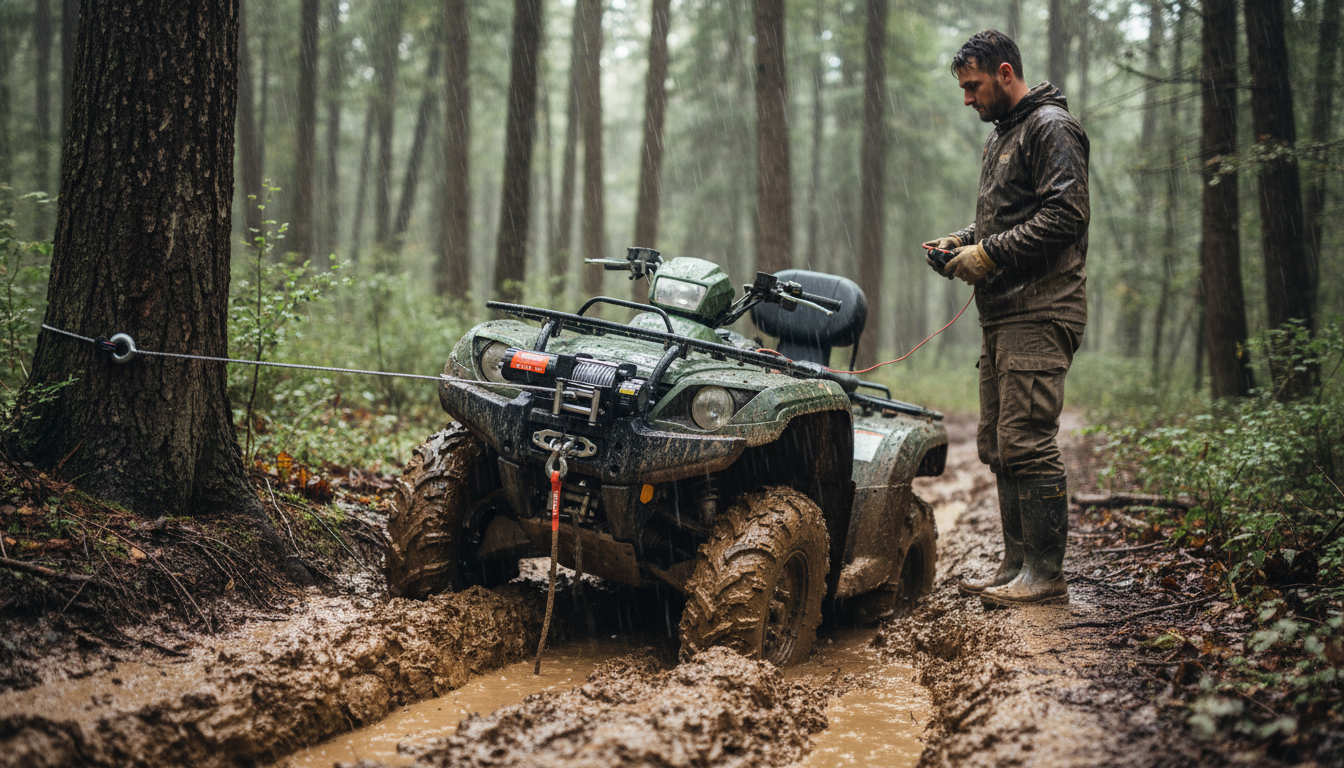
Waterproof ATV/UTV Winch with Steel Cable for Trail Recovery and Utility Work
A dependable winch turns an ATV or UTV into a practical recovery tool for mud, water crossings, snow, and work-site hauling. A waterproof build helps protect the motor and controls during wet rides, while a steel cable handles abrasion and rough contact points when pulling in rocky terrain. The guidance below focuses on real-world use, setup, safety, and upkeep so the winch performs when it matters most.
What This Winch Helps With
- Self-recovery from mud, ruts, or snow when traction is lost
- Assisting another vehicle with controlled pulls using proper rigging
- Moving downed branches, small logs, or equipment around a property
- Improving confidence on solo rides by adding a reliable recovery option
On the trail, a winch is often the difference between a slow, careful exit and hours of digging. On property, it can also serve as a steady “pulling hand” for staging equipment, dragging brush, or repositioning trailers (with appropriate wheel chocks and safe rigging).
Waterproof Construction: What It Means on the Trail
- Reduced risk of moisture-related issues during rain, puddles, and washdowns
- Better protection for electrical connections and control components when properly sealed
- Real-world waterproofing still depends on installation: routed cables, sealed terminals, and protected connectors
- Post-ride habits that preserve waterproof performance: rinse mud, dry connectors, inspect for trapped debris
A “waterproof” winch is best viewed as water-resistant by design, not indestructible. The winch body may be sealed, but the system includes battery leads, contactor/solenoid wiring, switches or remotes, and grounding points—any of which can become a failure point if exposed or corroded. After wet rides, take a few minutes to rinse off grit and check that connectors are seated, dry, and not packed with mud.
Steel Cable Benefits and Tradeoffs
- Steel cable resists abrasion and heat well when it contacts rocks, fairleads, or rough anchor points
- Tradeoffs include higher weight and potential for kinks or broken strands if mishandled
- Gloves are essential; inspect frequently for burrs, crushed sections, and fraying strands
- Keep the cable spooled evenly to prevent binding and damage under load
Steel cable earns its keep in messy, abrasive recoveries—especially where the line may rub against a fairlead or a rock edge. The tradeoff is handling: if the cable is pulled at an angle and then spooled carelessly, it can pinch, kink, or develop “meat hooks” (broken strands). A slow, tidy respool under light tension is one of the simplest ways to extend cable life and keep pulls smooth.
Quick Spec and Feature Checklist
- Confirm fitment: mounting plate pattern, available space, and fairlead compatibility
- Electrical readiness: battery condition, cable gauge, and secure ground connection
- Control access: where the switch or remote will be positioned for safe operation
- Recovery kit readiness: tree saver strap, D-rings/shackles, snatch block, and winch dampener
Pre-Install Checklist for ATV/UTV Winches
| Item to Verify | Why It Matters | What to Look For |
|---|---|---|
| Mount location and bolt pattern | Prevents vibration, misalignment, and frame stress | Compatible plate, correct hardware, solid mounting points |
| Battery and charging system | Avoids voltage drop and slow pulls | Healthy battery, clean terminals, stable charging output |
| Power cable routing | Reduces shorts, water intrusion, and abrasion | Away from exhaust/edges, protected loom, sealed connections |
| Fairlead alignment | Protects cable and improves spooling | Centered lead-in, smooth rollers or hawse, no sharp edges |
| Anchor gear | Enables safer pulls and reduces damage to trees/rigging | Tree saver strap, rated shackles, snatch block, dampener |
Safe Winching Practices for Mud, Water, and Uneven Ground
- Choose solid anchors: healthy trees (with a tree saver), buried anchors, or another vehicle with proper points
- Maintain a straight pull when possible; reposition or use a snatch block to reduce side loading
- Use a winch dampener or heavy jacket on the line to reduce snap-back risk
- Keep bystanders clear; never step over a tensioned cable
- Pulse the winch and monitor heat during long pulls; stop if the motor or cables get excessively hot
For more detailed technique and safety reminders, consult manufacturer guidance such as Warn Industries winching resources and Superwinch safety guidelines. For general electrical safety concepts around wiring protection and hazards, see OSHA’s electrical safety guidance.
Installation Notes That Improve Reliability
Maintenance Routine for Long Service Life
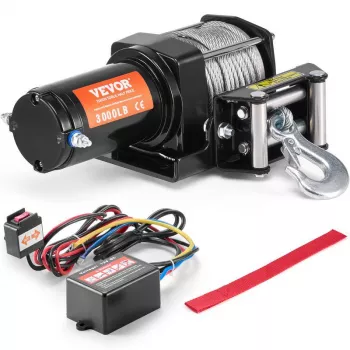
Product Spotlight: Waterproof ATV UTV Winch with Steel Cable
If trail riding includes water crossings, mud holes, and frequent washdowns, a sealed, water-resistant winch build is a practical choice. The Waterproof ATV UTV Winch with Steel Cable is designed for ATV/UTV recovery and utility pulling where water and mud are common, and its steel line is well-suited to rugged contact points and abrasive conditions.
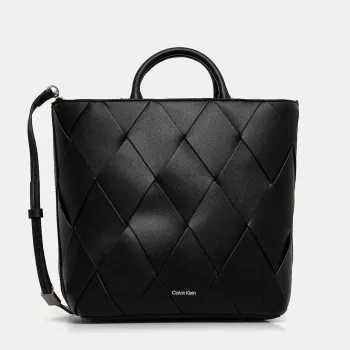
For organization on rides, a dedicated bag can help keep gloves, shackles, and straps contained and easy to grab. The Calvin Klein Women’s Black Zip Tote Bag can serve as a simple storage option for lighter recovery accessories when stowed away from sharp tools and dirty hardware.
FAQ
Is a waterproof winch safe to submerge during water crossings?
Waterproofing helps resist water intrusion, but full submersion or prolonged exposure can still cause problems if connectors, terminals, or the control box aren’t sealed well. Correct mounting, protected wiring, and post-crossing inspection/drying are key to keeping it reliable.
How often should a steel winch cable be replaced?
Replace based on condition rather than a fixed schedule: swap it out if you find multiple broken strands in one lay, severe kinks, crushed sections, or heavy corrosion. Inspect after hard pulls and after muddy or gritty rides that can accelerate wear.
What recovery gear should be carried with a winch?
Carry a tree saver strap, rated shackles/D-rings, a snatch block, a winch dampener, and sturdy gloves. Make sure all rigging is appropriately rated for your vehicle weight and the types of pulls you expect.
Recommended for you

7-Inch Smart Alarm Panel: WiFi + 4G, App & Voice
May 24, 2026







Leave a comment