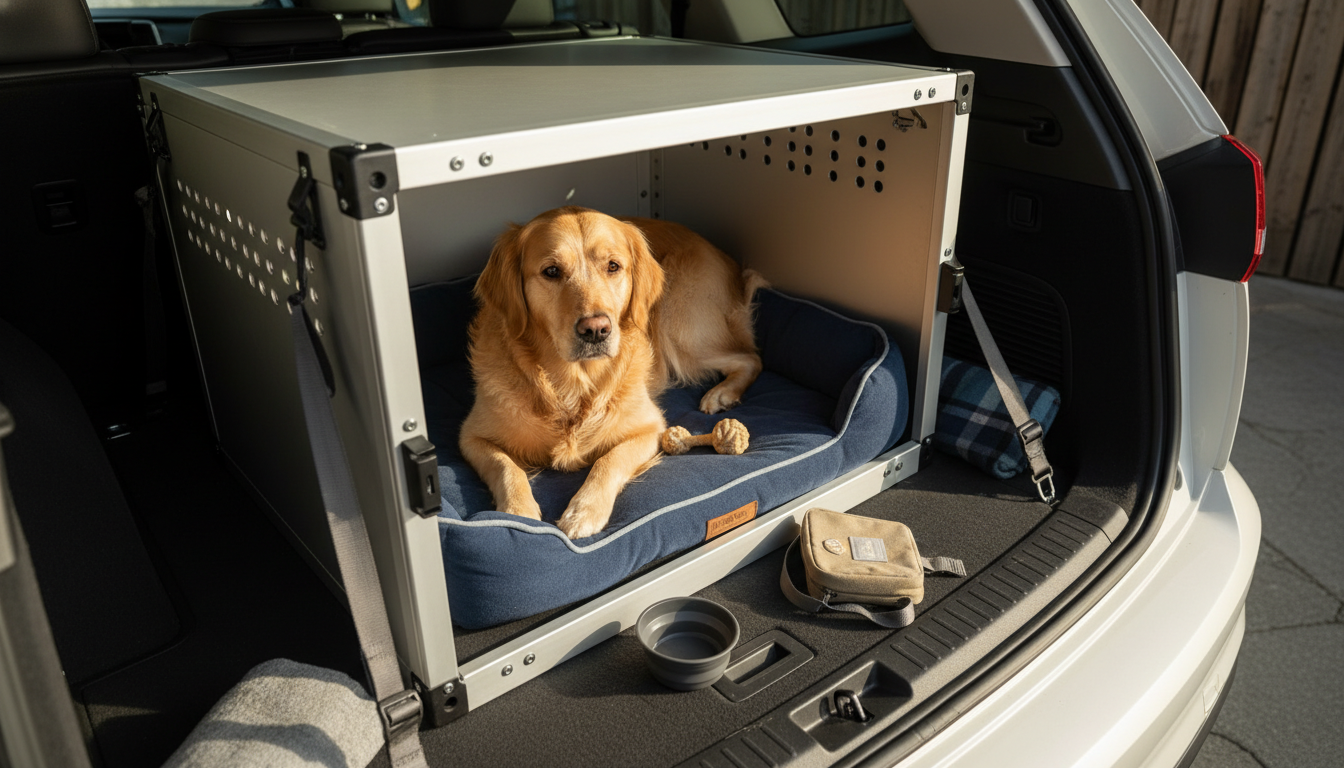
The best crate for a dog with separation anxiety is one that feels like a secure den, stays stable when the dog panics, and won’t accidentally reward escape attempts. For many dogs, a sturdy wire crate with a snug cover (or a heavy-duty crate for strong chewers) works well because it balances airflow, visibility control, and durability. The “best” choice depends on whether your dog tries to break out, chews, or becomes more distressed when they can’t see what’s happening.
Strength and secure latches: If your dog paws, slams, or bites at doors, prioritize reinforced doors, tight bar spacing, and locking mechanisms that won’t pop open. A crate that flexes or rattles can escalate panic.
Den-like feel: Many anxious dogs settle faster when the crate feels enclosed. A fitted crate cover can reduce visual triggers and make the space feel safer—while still allowing airflow.
Stable footprint: A crate that slides across the floor during a frantic episode can increase fear. Look for non-slip feet or add a stable mat underneath the crate (not inside it) to keep it from shifting.
Easy entry and calmer exits: A wide door and smooth edges help you guide your dog in without wrestling. If your dog rushes the door, a design that opens cleanly and closes quietly can reduce daily tension.
Wire crates: Often a great starting point because they’re ventilated and easy to cover for a more den-like setup. Choose a model that doesn’t wobble and has a dependable latch.
Plastic (airline-style) crates: More enclosed by default, which can help some dogs feel less exposed. They’re typically less escape-resistant than heavy-duty options for determined chewers.
Heavy-duty crates: Best for dogs that bend bars, break latches, or injure themselves trying to escape. They’re heavier and pricier, but often the safest option for extreme anxiety behaviors.
Place the crate in a low-traffic area with predictable household sounds, keep the door routine calm (no emotional goodbyes), and build positive associations with short practice sessions. If anxiety is severe, involve a veterinarian or credentialed behavior professional, since medication and structured behavior plans can be necessary.
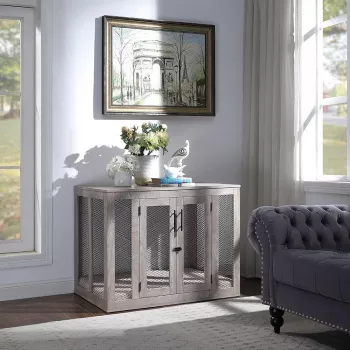
For practical details on choosing a crate that fits your space and daily routine, see this guide: space-saving medium dog crate and door setup guide.
Start with very short, successful sessions (seconds to a minute) paired with calm rewards, then increase time gradually. Practice many times a day, and avoid using the crate only for departures so it doesn’t become a cue for being left alone.





Leave a comment