-
Shop
- Adidas
- Advanced Technologies
- Apple Accessories
- Best-Sellers
- Car Accessories
- Dating & Social Skills
- Digital Resources
- AI Skills
- Beauty
- Car Buying & Ownership
- Cozy Feast Collection
- Electronics & Technology
- Financial Education
- Hobbies
- Home Styling & Organization
- Mindset
- Online Business
- Parenting & Child Development
- Personal Style & Fashion
- Pet Lifestyle & Wellness
- Smart Life with AI
- Travel Planning
- Wellness
- Yoga & Fitness
- Education & Learning
- Family & Parenting
- Fashion
- Alexander McQueen
- Bags
- Bags & Wallets
- Balenciaga
- Belts
- Blazers
- Blouses & Shirts
- Bottega Veneta
- Brunello Cucinelli
- Burberry
- Chanel
- Chloé
- Dior
- Dolce & Gabbana
- Dresses
- Etro
- Fendi
- Gucci
- Hats & Hair Accessories
- Jacquemus
- Jewelry
- Jil Sander
- Keychains
- Kiton
- Luggage
- Luggage Bags
- Miu Miu
- Off-White
- Outerwear
- Prada
- Rick Owens
- Saint Laurent
- Socks & Tights
- The Row
- Tom Ford
- Valentino
- Valentino Garavani
- Versace
- Vivienne Westwood
- Watches
- Furniture
- Gadgets
- Health & Beauty
- Health & Wellness
- Home & Garden
- Kids & Babies
- Kitchen
- Lighting
- Patio, Lawn & Garden
- Personal Growth
- Pet Care
- Pet Supplies
- Pets
- Shoes
- Sport & Outdoors
- Stress Relief & Relaxation
- Travel
- Wealth
- Popular
- Best deals
Smart Self-Cleaning Litter Boxes for Multi-Cat Homes
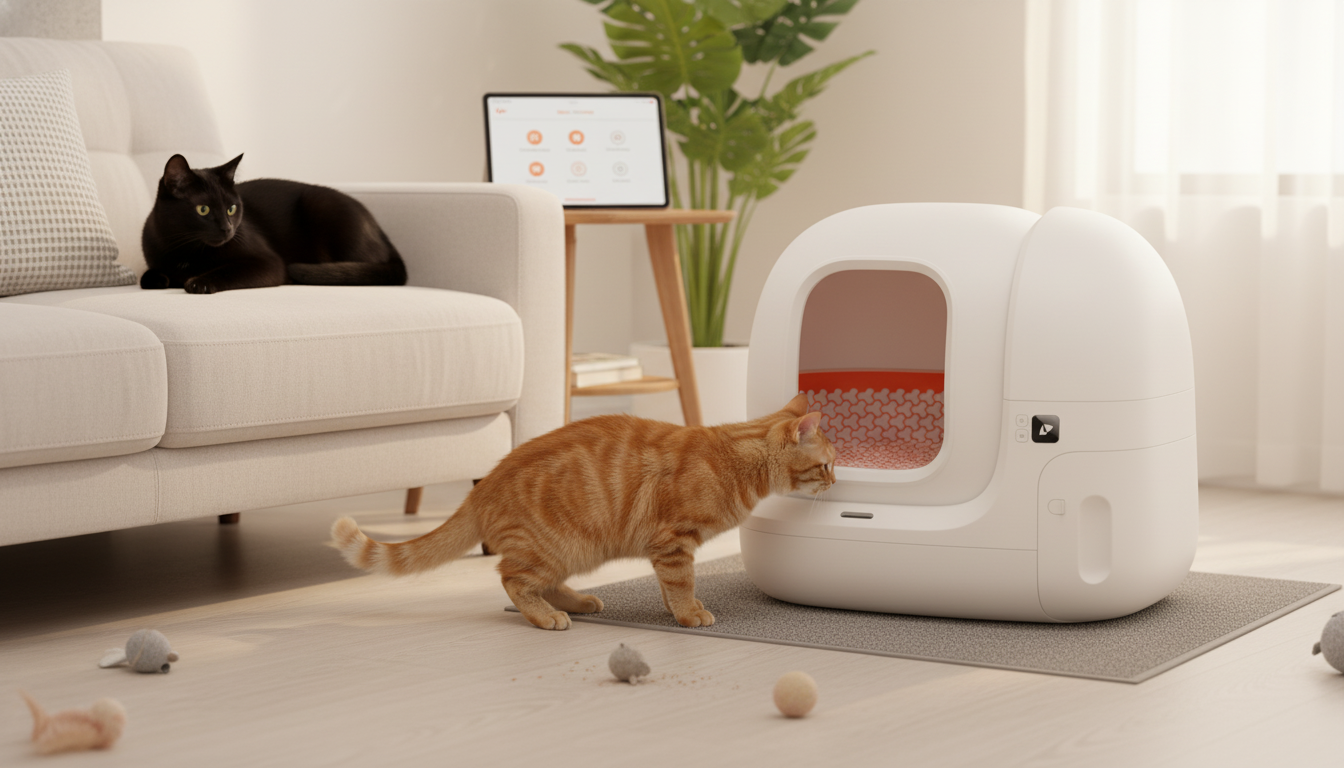
Smart Self-Cleaning Litter Boxes: A Cleaner Routine for Multi-Cat Homes
A smart self-cleaning litter box can reduce daily scooping, keep odors more contained, and help track bathroom habits—especially in multi-cat homes where cleanliness changes quickly. The right setup can make the box feel consistently “fresh,” which often lowers the odds of stress-related avoidance or accidents. Below is a practical guide to how app-controlled self-cleaning boxes work, what matters most when 2–3+ cats share one unit, and how to get reliable, low-mess performance day after day.
What makes a litter box “smart” and self-cleaning
Self-cleaning litter boxes automate the hardest part of litter maintenance: separating waste from clean litter. Most models run a cycle after each use (or on a schedule), moving clumps/solids into a waste compartment. That waste area is typically sealed to limit odor and to keep what’s already been collected from mixing back into the litter bed.
“Smart” features generally come from app connectivity. Depending on the unit, the app can let you adjust cycle timing, see cycle status, receive alerts (like “bin full” or “drawer open”), and review basic usage insights—especially useful when multiple cats share a single box and changes can happen fast.
Odor control is usually a combination of a covered design, a well-fitted waste drawer, and optional filters or deodorizing accessories. Just as important are safety sensors: reputable designs detect when a cat is present and pause movement, reducing risk during operation.
Why app control helps in multi-cat households
With multiple cats, the litter box can go from acceptable to overwhelmed in a short window. App notifications help you stay ahead of that curve by flagging a full waste bin, missed cycles, or maintenance reminders, so the box doesn’t become a “no-go zone” for one of your cats.
Usage trends can also add helpful context when something seems off. If one cat suddenly visits much more frequently, or overall activity drops, that information can support a more informed conversation with your veterinarian. For broader feline health and care guidance, you can reference resources from the American Veterinary Medical Association (AVMA) and monitoring tips from the Cornell Feline Health Center.
App control is also practical for daily life: run cycles after bedtime to reduce noise, trigger a cleanup before guests arrive, or share access so multiple household members can handle alerts without one person carrying the full responsibility.
Capacity planning for multiple cats
For multi-cat success, capacity matters as much as convenience. Two things largely determine your maintenance cadence: the litter bed space (how well it stays usable between cycles) and the waste-bin volume (how quickly it fills). A larger, well-sealed bin typically buys more time between emptying and helps prevent odor spikes.
Many households still do best with more than one box, especially if cats have different confidence levels or social dynamics. A high-capacity automatic unit can significantly reduce workload, but it may not fully replace an additional box in every home—particularly if a timid cat avoids a shared area or if there’s resource guarding.
Also consider the cats themselves: kittens and seniors may need a lower, easier entry; larger cats need enough interior space to turn comfortably. Placement matters, too—choose a quiet, low-traffic location with a straightforward approach so cats don’t feel “cornered” when another cat is nearby. If you’re troubleshooting stress or avoidance behaviors, the ASPCA cat care resources can be a helpful starting point.
Multi-cat planning checklist
| Factor | What to look for | Why it matters with multiple cats |
|---|---|---|
| Waste bin size | Sealed bin with liners; easy removal | More cats means faster fill-up and stronger odors if delayed |
| Cycle frequency options | After-each-use and scheduled modes | Prevents buildup during busy hours |
| Entry height and step design | Comfortable entry for kittens/seniors | Different ages in one home need accessible entry |
| Noise level | Quiet motor and smooth cycle | Noise sensitivity can cause avoidance when cats share one box |
| Litter tracking control | Compatible mats/steps; contained design | More traffic increases tracked litter around the home |
| App notifications | Full bin, fault alerts, cycle status | Faster response prevents one cat “protesting” with accidents |
Daily use: what ownership looks like
Day to day, a smart self-cleaning unit is less about scooping and more about quick checks. A typical routine is: glance at the app for alerts, confirm the waste drawer isn’t full, and do a fast visual check that litter level is adequate and the interior looks clean.
Setup and training for smooth adoption
Safety, hygiene, and odor control basics
Limitations and trade-offs to know before buying
Product overview: Smart Self-Cleaning Cat Litter Box with App Control for Multiple Cats
The Smart Self-Cleaning Cat Litter Box with App Control for Multiple Cats is built to automate scooping while supporting the higher throughput of multi-cat use. App-connected controls make it easier to keep cycles consistent, respond quickly to maintenance alerts, and maintain a predictable routine that cats tend to prefer.
More in-stock picks
- Calvin Klein Women’s Black Zip Tote Bag (useful for carrying small pet essentials when you’re on the go)
- Modern 2-Tier Faux Marble Coffee Table with Gold Metal Frame (a wipe-clean surface option for busy living spaces)
FAQ
What are the disadvantages of smart litter boxes?
The main drawbacks are higher upfront cost, ongoing supplies like liners or filters, and the fact that some cats dislike noise, motion, or enclosed designs. They can also need troubleshooting for sensor errors or residue buildup, and they usually perform best with specific clumping litters.
Can 3 cats share one automatic litter box?
Yes, it can work if the unit has enough waste-bin capacity, runs frequent cycles, and the bin is emptied on time. Behavior matters, though—timid cats or resource guarding can make a second box a better choice in some homes.
Recommended for you


Does Smart WiFi Really Work? Reliability & Fixes
May 24, 2026







Leave a comment